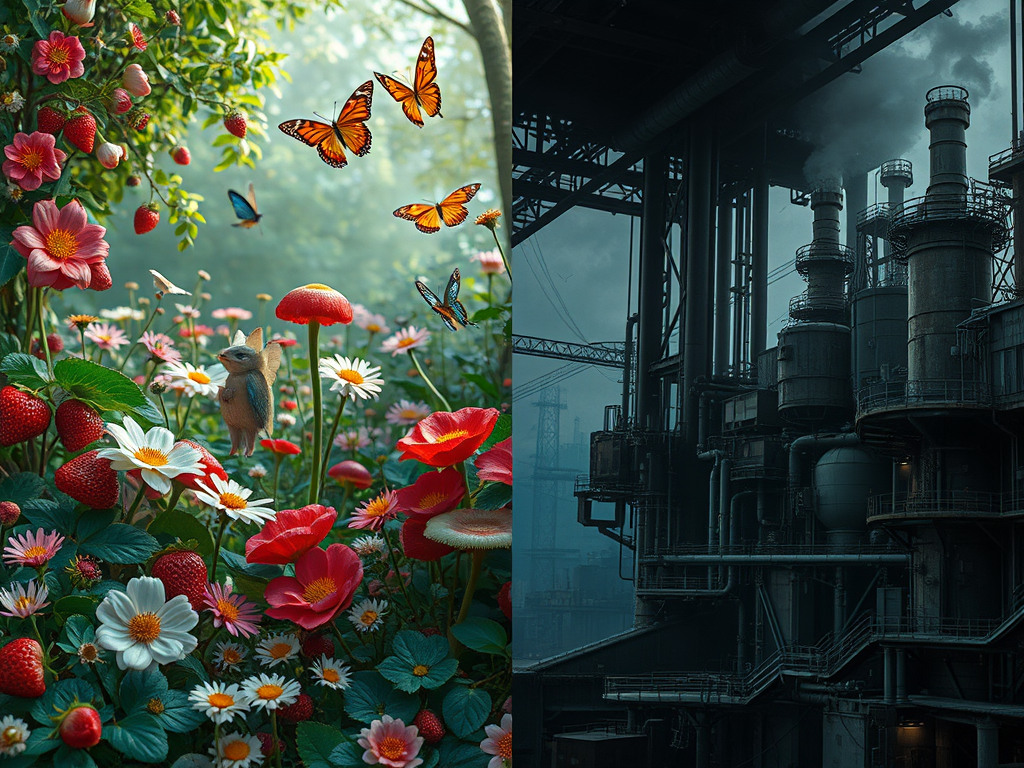
What is Setting Juxtaposition?
Sometimes it’s not just the setting that tells the story, but what it’s placed next to.
Juxtaposing two environments, or characters within those environments, can say volumes about class, personality, value systems, or transformation.
The Great Gatsby
Fitzgerald masterfully uses setting contrast to characterize both individuals and society:
East Egg (Daisy & Tom) vs. West Egg (Gatsby)
→ Old money vs. new money. Restraint vs. ostentation.
→ Gatsby’s wealth is loud, excessive, mirroring his desperation to be seen, accepted, and loved.
Nick’s modest cottage wedged between Gatsby’s grand mansion and other estate homes:
→ Nick, the observer, lives simply.
→ His physical position also reflects his moral position, between corruption and purity, desire and restraint.
These spatial choices create emotional impressions: envy, irony, insecurity, longing, or judgment.
Harry Potter:
The Dursleys’ cold, sterile home contrasts sharply with the magical chaos of the Weasley Burrow. This contrast highlights both emotional repression and the warmth of chosen family.
Your Turn: Use the Gap
Ask yourself:
Where can two settings sit in stark contrast?
How can the space between them reveal class, desire, or conflict?
Can the geography itself echo the distance between characters?
Contrast clarifies. Juxtaposition sharpens the edge.
Let your locations speak to each other and reveal the soul of your characters in between.
Happy Writing!
Discover more from Story Structure Studio: Device and Design...
Subscribe to get the latest posts sent to your email.
 Story Structure Studio: Device and Design...
One thought on “Design Setting: Juxtaposition to Characterize”